About Carbon Black
- : Heavy petroleum oil or natural gas is heated to a very high temperature in a space with low oxygen.
- Structure: Small carbon spheres join together to make tight, chain-like clumps.
- Difference from soot: Carbon black is a clean, highly controlled industrial product, while everyday soot is an uncontrolled, dirty mix of various waste chemicals. [1, 2, 3, 4, 5]
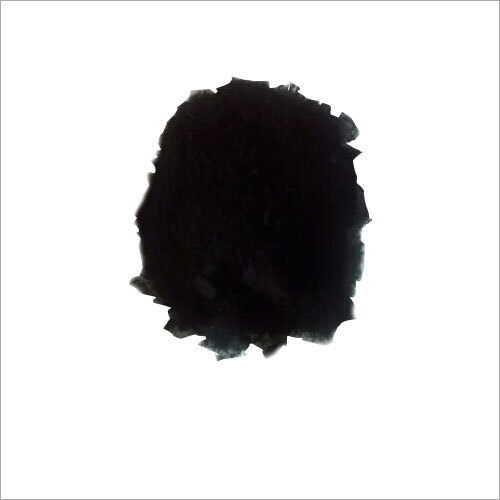
Carbon Black delivers outstanding performance in both pigmentation and reinforcement across multiple industries. Its fine particle size and exceptionally high surface area grant superior coloration and improved mechanical strength. Depending on grade, this material also functions effectively as a conductive or semi-conductive additive, making it a key component for applications demanding anti-static or electrical properties.
Versatile ApplicationsDue to its adaptability, Carbon Black is widely used in industrial settings as a pigment, reinforcer, UV stabilizer, and anti-static agent. Whether integrated into polymers, paints, coatings, inks, or batteries, it enhances functional attributes and durability. Its chemical composition ensures stability and performance in demanding environments.
Stable and Safe to UseWith a purity exceeding 98% and non-poisonous nature, Carbon Black remains safe under recommended handling. Although insoluble in water and most solvents, its amorphous structure and neutral pH facilitate straightforward incorporation into a variety of industrial processes. Proper storage ensures an indefinite shelf life, maintaining product integrity.
FAQ's of Carbon Black:
Q: How should Carbon Black be stored to ensure maximum shelf life?
A: Carbon Black should be stored in tightly sealed packaging, in a cool, dry environment away from sources of moisture and direct sunlight. Under these conditions, its shelf life remains indefinite.
Q: What are the main industrial applications of Carbon Black?
A: Carbon Black is commonly used as a pigment in paints, inks, and plastics; as a reinforcing filler in rubber products; an anti-static agent in electronics; and a UV stabilizer in various polymers.
Q: When should a conductive or semi-conductive grade of Carbon Black be chosen?
A: Conductive or semi-conductive grades should be selected when end-use applications require enhanced electrical conductivity, such as in electronic components, batteries, or anti-static packaging.
Q: Where is Carbon Black typically added in the manufacturing process?
A: Carbon Black is usually introduced during the blending phase of production, such as in polymer compounding, rubber mixing, ink formulation, or paint dispersion, for optimal distribution and performance.
Q: What safety precautions are recommended when handling Carbon Black?
A: Although Carbon Black is non-toxic and non-poisonous, it is advised to use dust masks or respirators and ensure adequate ventilation to minimize inhalation of fine powder particles during handling.
Q: How does Carbon Black benefit industrial products?
A: Carbon Black enhances pigment intensity, mechanical strength, conductivity, and UV resistance in finished products, leading to superior appearance, durability, and functional performance.





 Send Inquiry

 Send Inquiry
 Send Inquiry